This fall, our BC Seed Security Program team travelled across British Columbia for another rewarding year of seed cleaning. We focused on supporting farmers and gardeners by providing access to essential seed-cleaning equipment for communities that need it most. This initiative helped foster connections among diverse communities, promoting collaboration and creating a network of individuals passionate about seed sovereignty. By encouraging the use of locally adapted, ecologically grown seeds, we ensure farmers and gardeners can access high-quality, resilient seed stock tailored to their unique environments. This approach strengthens food security and contributes to a more sustainable, biodiverse agricultural landscape across the province.
One participant Susan from our stop in Grindrod shared:
“I have lots of seeds that need cleaning… Many varieties of grains were cleaned and that saved me countless hours. I also was amazed at how well and clean my lettuce seed came out!”
We appreciate feedback like this so much, as it reflects the practical value of our efforts and highlights how essential these services are to local growers.
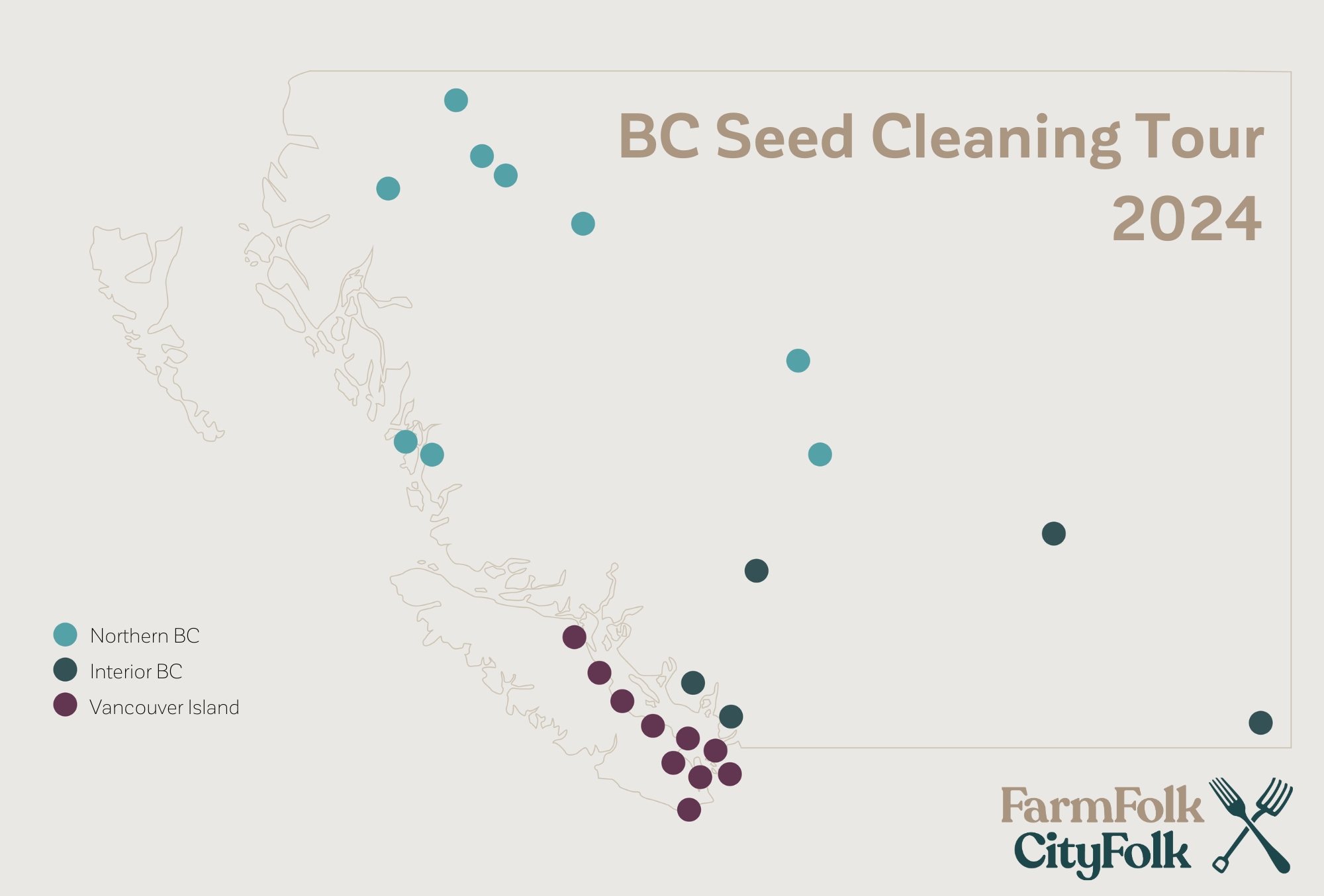
Throughout the season, we took our seed cleaning equipment on three separate tours—covering Vancouver Island, Northern BC, and the Interior—and successfully cleaned seeds at 26 locations across the province.
After a sunny morning of demoing seed cleaning equipment at our Vancouver Island Seed Farm Hub Site (the Seed Cleaning Trailer’s home base), our Vancouver Island Seed Coordinator, Lisa Willott and our BC Seed Security Program Assistant, Jules Cundari, prepared for the first stop of our tour. With the trailer loaded and ready, we set off to Duncan, BC to kick off another season of seed cleaning and community support.
Cowichan Green Community’s Fall Farm Fest in Duncan was an incredible celebration that included food, music, compost tea brewing, microscopic soil biology viewing and much more. We were lucky to have the opportunity to assist in cleaning native seeds and flowers at this event. Using screens, we threshed and cleaned brassicas and mustards, working with a dozen varieties and processing about 10 lbs of seed. A highlight of the event was meeting a farmer who had been saving grass seed for cattle feed for over 70 years. He generously shared a wealth of knowledge gained through years of trial and error, and we were able to show him some cool new equipment too! It is always inspiring to learn new techniques from seasoned growers, and these exchanges serve as a powerful reminder of the invaluable lessons we continue to learn each year in the world of seed saving.
The following day, Lisa travelled to the Nanaimo North Library, a busy location where we worked mostly with Seed Library members (a wonderfully multi-generational group). We helped clean a wide variety of seeds, 40 or so varieties ranging from vegetables to flowers. While most of the lots were small, we processed up to 30 lbs of seed, supporting the community in their efforts to preserve and share diverse plant varieties.
Next was Burgoyne Valley Community Farm on Salt Spring Island, where we helped clean seeds from crops like arugula, broccoli, carrots, lettuce, beets, radicchio, and onions. We left the trailer on Salt Spring where farmers and gardeners booked multi-hour self-serve time slots according to their needs. The diverse mix of crops cleaned demonstrated the island’s commitment to growing a wide range of food and contributing to regional seed security.
Jules rejoined Lisa on the tour and we made our way to Galiano Island. On Friday, we visited Galiano Community School, where we chatted about the exciting world of seed saving with local elementary-level students. The kids were filled with enthusiasm and especially thrilled with the thresher box, getting to stomp beans and chickpeas out of their pods, as other students played our seed matching game. The experience reminded us of the importance of infusing joy and playfulness into this vital work, always leading with curiosity.
The next day, we set up at the Galiano Saturday Market, where the Seed Library of Galiano (SLOG) members were present. We cleaned a wide variety of seeds, including sunflowers, beans, carrots, snap peas, broccoli, lettuce, and ten other bean varieties.
Early the following morning, we made our way to Pender Island Community Hall, where local residents contributed seeds they had saved for the island’s seed library. The day was steady, with people dropping in and out to donate seeds to the local seed library, including flax, chickpeas, calendula, and beans (with over 50 varieties). After a great day of threshing, winnow wizarding, and screening, Jules returned to Victoria to help maintain the Sandown Seed Farm Hub Site, while Lisa continued the tour.
In Black Creek, at Good Earth Farm, a wide variety of seeds were saved, including lettuces, peas, amaranth, quinoa, corn, and spinach. Simon showed us his new bucket/bin thresher that we used for a few types of beans that were splitting in our larger thresher. We cleaned around 200 lbs of seed from approximately 30 varieties. Denman Island saw a larger crowd at their Saturday community market. It was a bustling market day and when the seed cleaning equipment sprung to life, a large crowd formed to learn about seed cleaning. One grower had a large quantity of beans that kept a handful of kids engaged in the cleaning for the duration of the market! With their dedicated help, we cleaned over 40 lbs of mixed beans and around 10 varieties of seeds.
In Royston, at Stellar Raven Ecological Farm, we processed small lots of grains such as barley and wheat, as well as lettuces, root vegetables, and flowers. The Comox Seed Valley Seed Savers and Growers are always very organized and dedicated to the stewardship of diverse varieties grown out in their community, and each year it’s a joy to see what has grown well and see new varieties of crossed beans, for example. With a stop in Errington at Cicada Farms, Michalina used the equipment to clean a huge variety of medicinal and perennial seeds. Finally, at Haliburton Farm, the trailer has found a resting spot for the winter, where farmers are continuing to clean seeds as needed over the winter months. After a great tour, we began taking the steps to get our Vancouver Island Seed Farm Hub Site ready for winter, clean our own saved seeds, and reflect on a great season of growing.
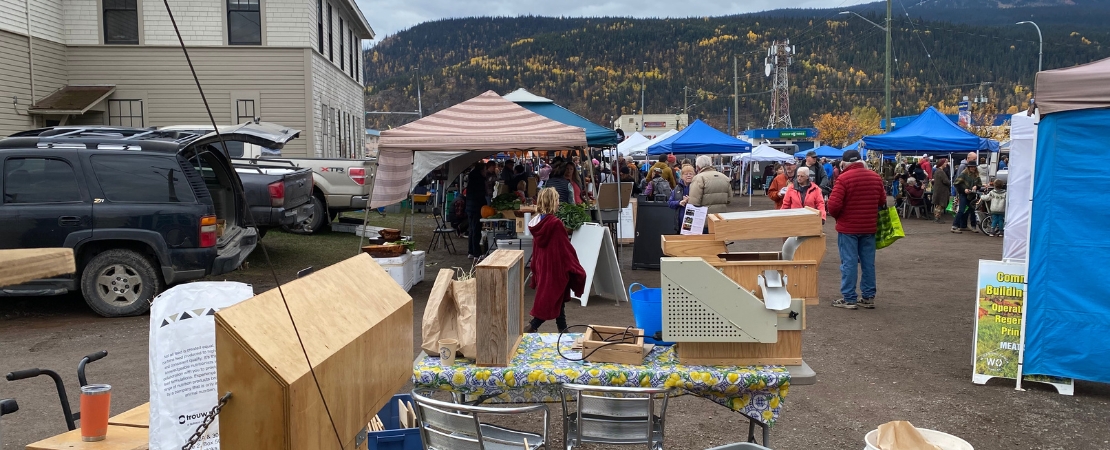
Jolene Swain, our Northern BC Seed Coordinator, opened up the trailer after a long and wet northern winter at WoodGrain Farm. An enthusiastic group of local and international visitors joined in to clean some early seed crops, including carrot, Pembina wheat (seed grow-out from Seeds of Diversity), and Mizuna mustard. WoodGrain Farmer, Jonathan, had just harvested wheat from the fields with the 1950s Massey-Ferguson combine and ran the seed through a cockshutt fanning mill.
Sometimes, it makes more sense to move people than trailers, and support remote communities with development and acquiring resources. Thanks to funding from the New Horizons for Seniors Grant and support from Coastal Foodways, we were excited to visit Heiltsuk territory where we shared meals, saved seeds, and connected community members engaging with food and seed sovereignty on the central coast.
Qqs (Eyes) Projects Society is a Haíɫzaqv (Heiltsuk) charitable non-profit focused on supporting Haíɫzaqv youth and families. We spent an afternoon cleaning seeds with Jennifer Lightning Soifer, Qqs project coordinator and head gardener. We also visited food-producing projects focused on growing food for and with elders and families as part of the granny garden project. Pauline Imamura, Food Security Programs Manager, took a break from sharing food from the pantry to check out the newest piece of seed cleaning equipment, a zig-zag cleaner that arrived just in time to clean mustard and flower seeds saved locally.
During the visit, we were incredibly grateful to join Food Champions from across the central coast to develop a vision for a regional food network. Some fundamental truths that emerged are shared here. A big take-home message was the value of gathering community around good, local, and culturally meaningful food.
We had a lot of fun with students in the garden program at Telkwa Elementary School this summer. Heather Snosnowski and her garden cohort grew an abundant garden of squash, beans, broccoli, flowers, herbs and more. With screens, trowels, tarps, and many small hands, the students made short work of extracting seeds from squash and zucchini. The hollowed-out giant zucchini was the star of the show, and from the hollowed-out vessel emerged “zucchini man”. Colourful beans were a huge hit as students filled their envelopes with the abundance of seeds, to be safely stowed for next spring.
Back in September, we held our Northwest Medicinal Plant & Seed Field Day at Lost Farm near Smithers with support from the Wetzin’kwa Community Forest grant. It was an amazing day of connecting and learning. After a farm tour and time spent exploring the world of medicinal plants, we wrapped up the day at the Mobile Seed Cleaning Trailer to demonstrate the equipment available and clean some seeds. We started with a unique bean variety being stewarded by Fourth Sister Farm and worked through several pounds of coriander seed grown by Wild West Herb Co. There were some medicinal plants as well, including Anise hyssop and holy basil, which tied in nicely with discussions of the BC Medicinal Plant and Seed Project.
The grade 5-6 students of M. Benoit at Ecole Jack Cook Elementary School in Terrace wowed us with their knowledge and excitement for seed. It’s not very often adults, let alone children can recognize a carrot flower, but the strong agricultural roots in the community shone through. Vicky Serafini of Thimbleberry Farm joined Jolene to challenge the students to extract the seeds from zucchinis, squash, cucumbers, beans and mizuna. From stomping to shucking to air-borne zucchinis – the students and teachers alike were incredibly engaged and we all left with full hearts and pockets full of seeds. Thanks for having us!
On a rainy October day in the Northwest, we met with a small but passionate group of Terrace growers and food enthusiasts at the Public Library, home to the Northwest Seed Library. The seed library acquired some seed cleaning equipment several years ago, and it was wonderful to break out the screens and make short work of cleaning brassica and onion seeds. The beautiful rack designed and built by students was also admired, and many laughs, stories, and seeds were shared.
We were excited to bring the Seed Trailer to the Harvest Festival and Bulkley Valley Farmers’ Market in Smithers. Surrounded by snowy mountains and fall colours, we kept folks busy on the bicycle thresher cleaning grain and did some extra fine cleaning with the office clipper and air separator. Including some locally grown hemp seed from Righteous Path Produce.
Settling back at the home base, we opened the doors of the seed trailer at WoodGrain Farm. We had a seed cleaning day for Short Season Seeds crops, saving 2 kg of Broccoli seed, using the air separator for carrot seed, and Red Fife wheat for milling at WoodGrain Mill.
We started off the trip by driving to Athiana Acres to pick up a seed trailer, then through Aldergrove to grab a table and step stool. Waking up in Lac la Hache the following day, we drove up to the Williams Lake Farmers Market where we met up with Stephanie Bird and her seeds. We started off threshing and winnowing wheat, processing around 50 lbs of wheat. During this time, the office clipper ran inside the trailer to process clover seeds. After the wheat was done we moved on to barley; we did as much as possible and got around 30 lbs of seed. As time was running out we decided to get a third machine running, the air column separator, where we processed around 3 lbs of sweet pea seed. Normally we would run this through the winnow wizard, but it was occupied with barley. While letting the machines run we stomp threshed and hand-screened small amounts of salvia seed as well as did a finishing clean on about 10 lbs of beans with the air compressor. We wrapped up cleaning just after the market closed around 2:30 and were on the road to Quesnel by 3.
The Quesnel Fall Fair was a sight to see, with lots of award-winning chickens, fast herding dogs, and our favourite, Sea Biscuit the speedy donkey. We got to work pretty quickly processing 30 lbs of barley. Many fair attendees stopped by to see what was happening and learn about seed cleaning. We moved on to clean about 2 lbs of sweet peas, first, we threshed then screened to get rid of the big pods, then did a quick run through the winnow wizard. We finished off by cleaning two pounds of beet seeds, then packed up and headed to Kamloops.
Stopping in at the Stir in Kamloops was a delight. There was a great team of volunteers and new seed keepers. We stomped on rye, pea, and lettuce seeds together. The Stir had some really neat manual seed cleaning equipment including a thresher and winnower. We used the thresher initially for the rye, followed by a bit of stomp threshing, then ran it through our winnow wizard. We cleaned two types of peas, Manitoba bush peas and pea soup peas first threshing either using our bucket-drilled powered thresher or good ol’ communal stomping followed by the winnow wizard.
After cleaning the peas, we got started on the lettuce; they had saved many lettuce varieties and we were able to take a bit of each home with us. We used their winnowing machine, then ran it through the office clipper. We collected the best seed from the bottom and gathered the b grade seed. Eden, who was in charge at the Stir, showed us a great simple bowl winnowing method to get it a little bit cleaner. Inside the trailer, we ran the air column separator cleaning marshmallow seed and amaranth. Overall, it was a great day and we loved seeing the great work they are doing at the Stir in Kamloops.
The following morning we drove to Grindrod where we met a number of local farmers and members of the Shuswap Seed Savers. We spent all day cleaning farmers’ rye in larger machines and cleaning smaller amounts of seeds for the Shuswap Seed Savers group using our hand screens, office clipper, and air column separator. There were a lot of seeds to clean, but many hands made the process go by quicker and a hardy lunch kept our energy high. The next morning we cleaned the remaining seeds from Garden Faerie Seeds, a rare heirloom seeds saver in Canada, and cover crop seed for a local farmer.
We then made the long journey to Cranbrook at their Public Produce Garden where we met with Mary from Our Cold Climate Seed Library. We spent the day cleaning six different varieties of pea seeds, barley from a Seeds of Diversity grow-out, beans, spinach, bok choy and a couple of types of mustard. Overall, it was a great trip, and we are happy we were able to help farmers, seed savers, and seed librarians across the province.
A highlight of our Sunshine Coast tour was the incredible turnout and engagement from the local community. In addition to the dedicated members of the seed saving group, we had at least 30 people—many of whom were newcomers—stop by to ask questions and learn more about seed saving. Among them were at least a dozen kids, who are undoubtedly the promising future of seed saving. It is inspiring to see the next generation showing such curiosity and enthusiasm for this vital work.
During the event, we were able to clean and save over 50 lbs of beans, arugula, lettuce, and mizuna, all of which will go on to help further enrich the local seed bank and promote food sovereignty on the Coast.
Leonie, a participant in the event, shared her thoughts:
“I’ve received nothing but positive feedback from the day. Everyone seemed to have a great time. The seed mobile cleaner was a real hit, and I’m so glad you were able to bring it over. I think we all learned a lot from it. Personally, I’m also so relieved that we now have two teams for the seed libraries, bringing together more community members who will contribute to building seed security and education on the Coast.”
We are always so grateful for the feedback we receive and for the support and energy of everyone who comes out to these events. It’s truly inspiring to see people of all ages and backgrounds come together to share their knowledge and enthusiasm for seed saving. Thanks to the efforts of our community members, we are building a more resilient and connected network of seed keepers—one that will ensure the health of our local food systems for years to come.
We are grateful for all of our funders for this year’s seed cleaning tour, including the Victoria Foundation’s Community Grants Program through funding from the Government of British Columbia’s Community Prosperity Fund, the Government of Canada’s New Horizons for Seniors program and Youth Employment Skills Program, and the Wetzink’wa Community Forest’s grant program. Without their crucial support, these tours would not have been possible.
Thanks to their contributions, we have had the incredible opportunity to connect with passionate seed growers from every corner of the province. These tours allow us to celebrate and support the amazing work of local seed savers—those who have been nurturing and preserving seeds for generations, as well as the new generation of seed stewards eager to learn and get involved. It is incredible to learn from the deep knowledge and experience shared by seasoned growers and it is inspiring to witness the enthusiasm of newcomers. Each stop along the tour brings a new opportunity to exchange ideas, share stories, and reinforce the vital role that seed saving plays in food sovereignty, biodiversity, and climate resilience.
We are truly lucky to be a part of this vibrant and growing community of seed keepers. The impact of these tours goes beyond the practical benefits of seed cleaning; they are a reminder of the strength and interconnectedness of our agricultural communities, and a chance to sow the seeds of collaboration and learning for the future.
To learn more about our tours, how to request a stop for next year’s tour, or learn more about the equipment, visit our Mobile Seed Cleaning Trailer page.